
Rainier Affordable Housing Impact Fund
$1.75 million growth capital raise, backed by a $274 million active affordable housing pipeline.
Growth equity in an active $274 million affordable housing pipeline, with participation in Rainier's continued expansion.
Rainier Development is opening the Impact Fund to mission-aligned investors seeking equity participation in a 20-year development platform creating affordable housing through LIHTC development, adaptive reuse and historic preservation in high-demand U.S. markets.
- $274M+
- Active pipeline
- 761
- Units in development
- 28
- Completed projects
- $360M+
- Completed value
- 20+
- Years operating
The opportunity
A specialised platform for affordable housing, not a first-time fund.
LIHTC development is Rainier's core strategy. Adaptive reuse and historic preservation are its differentiator. Together with public-private partnerships and affordable housing finance programmes, they let Rainier create housing in some of America's most supply-constrained markets while preserving architecturally significant community assets.
Current activity spans ground-up affordable communities, office-to-housing conversions and historic rehabilitation serving working families and underserved populations. Rainier holds an ownership or development interest in each active pipeline project.
Rainier is not an early-stage team seeking seed capital. It is a mature operating platform raising growth equity to expand an already-active development pipeline.
Why now
The opportunity set is widening.
- Growing need for affordable housing
- Changing office-use patterns
- Constrained housing supply
- Dislocation in multifamily capital markets
The need for affordable housing continues to grow while changing office-use patterns, constrained housing supply and dislocation in multifamily capital markets are creating new acquisition and redevelopment opportunities. Rainier's combination of affordable-housing finance expertise, adaptive-reuse experience and institutional development partnerships positions the platform to pursue these opportunities selectively.
Active pipeline
761 units across four major U.S. markets.
Rainier holds an ownership or development interest in each active pipeline project. Fund capital extends this pipeline; it does not wait on it.
Combined development cost $274M+
 Seattle, WA
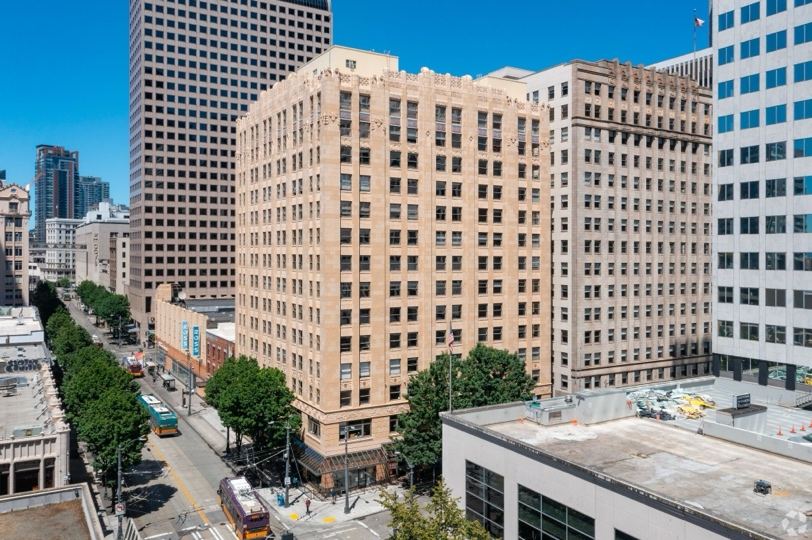
Joseph Vance Building
Historic office-to-housing conversion
- Units
- 181
- Development cost
- $98M
Co-developed with Development Ventures Group
 Dallas, TX
211 N. Ervay
Mid-century office-to-housing conversion
- Units
- 204
- Development cost
- $94M
Rainier principal co-development
 Denver, CO
Fox Street Affordable Housing
Ground-up affordable community
- Units
- 149
- Development cost
- $56M
Co-developed with Lincoln Avenue Communities
 Houston, TX
The Levy Apartments
Affordable rehabilitation
- Units
- 227
- Development cost
- $26M
Municipal development alignment
Why this strategy
Addressing the housing shortage at its point of leverage.
LIHTC development is the core of Rainier's strategy; adaptive reuse and historic preservation are what set it apart. Each project layers structural, predictable capital sources so that sponsor equity is the smallest piece of the stack.
LIHTC at the core
Low-Income Housing Tax Credit development, with an emphasis on 4% transactions, anchors every project with a predictable, structural source of equity.
Supply-constrained, high-demand markets
Creates much-needed affordable housing where land is scarce, demand is deepest and new supply is hardest to deliver.
Adaptive reuse as a differentiator
Where the opportunity fits, reusing existing structure, envelope and utility access delivers housing at a basis ground-up construction cannot match and unlocks historic incentives.
Layered capital, less sponsor equity
Combines tax-credit equity, tax-exempt debt, historic incentives and property-tax benefits so that sponsor equity is the smallest slice of the stack.
Preservation over demolition
Protects architecturally significant buildings and neighbourhood character, earning municipal and community support.
Illustrative capital stack
Layered capital reduces sponsor equity requirements.
Rainier combines tax-credit equity, tax-exempt debt, historic preservation incentives, property-tax benefits and other project-specific capital sources to reduce sponsor equity requirements and create financeable affordable housing developments.
- 4% LIHTC equity
- Tax-exempt debt
- Federal & state Historic Tax Credits
- Property-tax incentives
- Project-specific public/private capital
- Sponsor & investor equity
Proportions are illustrative of the sources Rainier layers into affordable and historic projects. Not every source applies to every project; actual capitalisation varies and is detailed in the offering memorandum.
Investor alignment
Designed for long-term participation in Rainier's development platform.
Investors participate in economic distributions generated by Rainier's current seeded pipeline and qualifying future development activity, creating the potential for both capital return and continuing participation as the platform grows.
Full investment terms, distribution priorities and risk factors are provided in the Confidential Private Placement Memorandum.
Today
Seeded pipeline
Economic distributions generated by the current $274M pipeline: four active projects across Seattle, Dallas, Denver and Houston.
Tomorrow
Future development
Continuing participation in qualifying future development activity as the platform grows beyond the seeded projects.
Your investment is supported by an existing $274M pipeline, and participates in Rainier's continued pipeline growth.
Fund overview
Growth capital for an established platform.
A focused raise. Capital is deployed into the front end of the development cycle, where Rainier's expertise creates the most value and where sponsor equity is otherwise the binding constraint.
- $1.75M
- Target raise
- $25,000
- Minimum investment
- $274M+
- Seeding pipeline value
- 4
- Active metro markets
Use of proceeds
- Pursue additional acquisition and development opportunities
- Fund predevelopment, entitlement and due diligence
- Secure site control on future pipeline projects
- Expand development capacity across target markets
Growth strategy
A disciplined approach to pipeline growth.
Rainier targets 125 to 225-unit affordable housing opportunities with a particular emphasis on 4% LIHTC transactions, capital-stack certainty and a clear path to financial closing. New opportunities are screened before significant pursuit capital is committed.
Screened for
- 1Housing demand
- 2Achievable rents
- 3Development basis
- 4Financing availability
- 5Reliance on competitive subsidy
About Rainier Development
Twenty years of acquiring, developing and repositioning real estate.
For more than two decades, Rainier Development has executed through thoughtful development, public-private partnerships and community-focused investment strategies. Because Rainier principals hold ownership interests in each active pipeline project, the company's incentives are tied directly to project performance and long-term value creation.
Edson Gallaudet
Founder & CEO, Rainier Development
- 28
- Completed projects
- $360M+
- Completed value
- 761
- Units in development
- 20+
- Years operating
How to participate
Three steps from enquiry to subscription.
- 01
Request the offering memorandum
Submit the form or email Edson directly. You will receive the Confidential Private Placement Memorandum and pipeline summary.
- 02
Review the fund and speak with the principal
Walk through the pipeline, capital stack, terms and governance directly with the Founder & CEO.
- 03
Subscribe
Eligible investors complete the Subscription Agreement and Operating Agreement. Minimum commitment is $25,000.
Request the offering memorandum
Review the pipeline, terms and offering documents directly with the principal.
Rainier is raising $1.75 million. Submit your details and Edson Gallaudet, Founder & CEO, will send the Confidential Private Placement Memorandum and arrange a call.
Edson Gallaudet
Founder & CEO, Rainier Development